
What Is A Garage Door Satchel? Your Complete Guide
December 30, 2025
Looking for a simple way to add extra security to your garage without complicated gadgets? A garage door satchel might…


Whether you’re running a warehouse, retail shop, auto shop, or storage facility, your entryways do more work than most people realize. A well-installed commercial garage door keeps your operations running smoothly, protects your inventory, and projects professionalism to every visitor or delivery driver who pulls up.
At Next Level Garage Service, business owners often ask which type of commercial garage door is best for their building, budget, and daily operations. The right choice depends on factors like security, insulation, traffic volume, and long-term maintenance needs.
This blog walks through everything businesses need to know about commercial garage door installation, from choosing the right door to the final inspection, so you can make informed decisions and avoid costly mistakes.
A commercial garage door involves far more complexity than a standard residential installation. These doors are larger, heavier, and subjected to significantly higher usage cycles. Where a home garage door might open and close a handful of times daily, a commercial door at a busy loading dock or storage facility could cycle dozens or even hundreds of times.
Commercial applications demand secure and efficient entryways built to withstand that kind of daily wear. The hardware, tracks, springs, and openers are all rated to different tolerances than their residential counterparts. That’s why commercial garage door services require specialized knowledge, equipment, and experience that go well beyond what a typical handyman can provide.
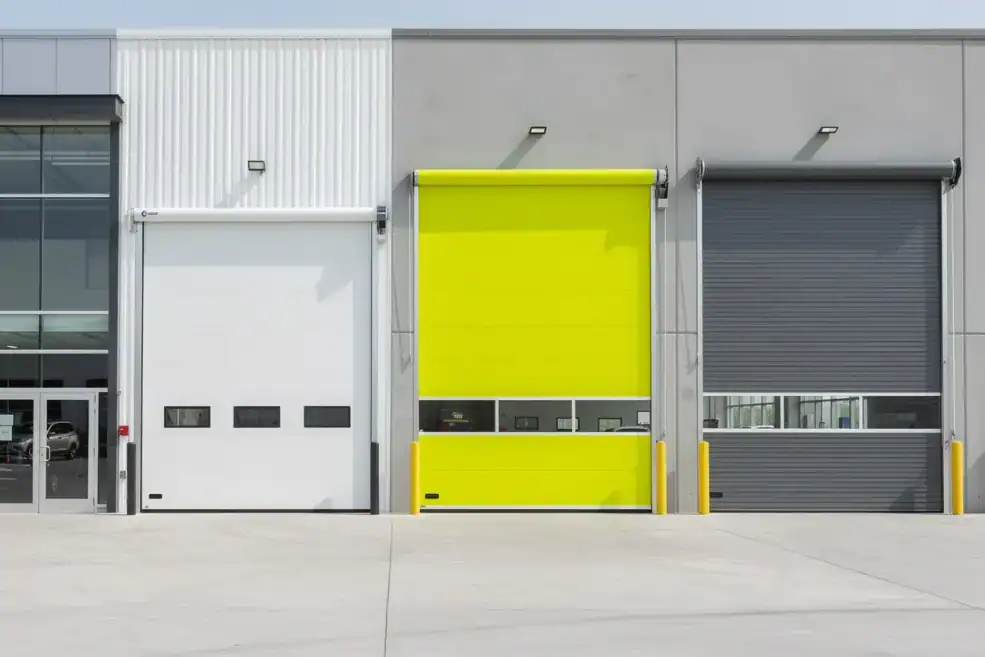
Selecting the right door is the foundation of a successful installation. The wrong door type leads to premature wear, energy inefficiency, and operational disruptions. Here’s a breakdown of the most common commercial door options:
Roll-up doors are one of the most popular choices for commercial properties. Designed to coil into a compact drum above the opening, roll-up designs work exceptionally well in spaces where headroom is limited. They’re commonly used in retail storefronts, dock equipment bays, and storage units. Steel roll-up models offer excellent durability and enhance security, while insulated versions can reduce energy costs significantly over time.
Sectional doors open by rising vertically along a set of vertical tracks before folding horizontally overhead. They’re ideal for warehouses and distribution centers where both energy efficiency and weather resistance matter. Proper installation of mounting panels and consistent alignment along the appropriate tracks is critical — even minor misalignment can cause binding or cause the door halfway to stick mid-cycle.
Tilt-up doors operate as a single solid panel that pivots outward and overhead as it opens. They’re typically found in older industrial buildings or facilities with limited ceiling space. While they offer a clean aesthetic, they require more clearance in front of the opening and may not be ideal for high-traffic environments. If you’re replacing an old garage door in a space originally designed for tilt up operation, consult with a professional installer before assuming it’s still the best fit.
Before a single panel is lifted into place, a thorough site assessment must be performed. This initial consultation stage is where a professional identifies structural requirements, measures the opening precisely, evaluates load-bearing capacity, and checks for electrical lines, gas lines, or other utilities that could affect the installation zone.
During site preparation, the installer will also verify compliance with local building codes and determine whether necessary permits are required. In Oklahoma City and the surrounding metro area, commercial installations are typically subject to code inspections, so skipping this step can result in fines or required rework later.
Proper site preparation ensures that the entire door system, tracks, springs, hardware, and opener integration are installed on a structurally sound foundation from the start.
Once the site has been assessed and the specific door model selected, installation can begin. Here’s how a professional installation typically unfolds:

The installer begins by setting up the appropriate tracks and verifying that the rough opening is plumb, level, and square. Vertical tracks on either side of the opening must be in the correct position and securely attached to the wall framing using sturdy screws and brackets.
For sectional doors, panels are installed from the bottom up. Each panel must be aligned carefully before moving to the remaining panels above. Panel fasteners must be tightened to manufacturer specifications — too much pressure can warp the panel, while too little can allow movement that causes noise and misalignment.
Commercial springs store enormous tension. This is one of the most dangerous parts of any garage door installation, which is why all technicians should wear protective gear, including safety goggles and gloves. Improperly tensioned springs can snap with tremendous force. This stage should never be attempted without professional assistance.
Commercial openers are significantly more powerful than residential units and often include advanced features like battery backup for use during a power outage, programmable force settings, and access control integration. Proper opener integration ensures smooth operation and prevents the opener from applying too much pressure during opening and closing cycles, which can damage hardware and shorten the door’s lifespan.
Once the system is assembled, safety features are tested thoroughly. This includes safety sensors that detect obstructions and trigger an automatic reversal — if the door detects something in its path, it should reverse immediately rather than continuing downward. Advanced locking mechanisms are tested for secure engagement, and the emergency release system is verified to function correctly.
The emergency release cord and emergency release feature allow the door to be manually lifted during a power outage or mechanical failure. Every staff member who works near the door should know where the emergency release cord is located and how to use it safely — but should never manually lift the door without fully disengaging the opener first.
Safety should be the top priority throughout any commercial installation. Workers should always wear protective gear, including safety goggles and heavy-duty gloves, when handling springs, cables, or door panels. The weight of a commercial door panel alone can cause serious injury if dropped.
Beyond personal protection, installations must comply with all applicable safety codes. This includes ensuring that safety sensors are mounted at the correct height, that force settings are calibrated properly, and that all electrical connections meet code. In commercial environments, non-compliance isn’t just a liability — it can halt operations entirely if an inspector flags the installation.
Modern commercial garage door systems offer significant advantages in energy efficiency and noise reduction. Insulated doors help regulate interior temperatures in climate-sensitive environments like auto shops, food distribution warehouses, and production facilities. This translates directly to lower energy costs year over year.
High-quality nylon rollers and properly lubricated hardware contribute to smooth movement and noise reduction — critical in environments where communication and concentration matter. Ensuring smooth movement starts at installation by using quality rollers, properly aligning tracks, and torquing all fasteners correctly.

A reputable commercial garage door service won’t consider the job done until a final inspection is complete. This includes verifying consistent alignment, testing the emergency release feature, confirming that safety sensors trigger correctly, and checking that opener force settings are dialed in for optimal performance.
After installation, it’s important to regularly inspect the door system for signs of wear, especially on springs, cables, rollers, and hinges. Catching small issues early prevents expensive emergency repairs and extends the life of the door. Most manufacturers recommend professional service at least once annually, with visual checks performed monthly.
Always follow the manufacturer’s instructions for lubrication, seasonal adjustments, and component replacement intervals. For specific door model guidance, consult the documentation provided at installation or contact your commercial garage door services provider.
While some businesses attempt DIY approaches to save money, commercial garage door installation is not a project to take lightly. The risk of injury during spring installation, the complexity of opener integration, and the consequences of code non-compliance all point to one clear recommendation: seek professional assistance.
A licensed professional installer brings the right tools, proper knowledge of building codes, and the experience to anticipate problems before they become expensive. They’ll also ensure the door’s functionality meets your operational needs — whether that’s a high-cycle roll-up at a dock, a fire-rated sectional for an industrial facility, or a secure entryway for an auto shop or storage facility.
Professional installation also typically includes workmanship warranties, giving business owners peace of mind that any issues discovered after the job are covered.
Investing in the right commercial garage door is one of the smartest decisions a business owner can make. It protects your assets, improves security, enhances curb appeal, and keeps daily operations running without interruption. Whether you need a new installation, an upgrade, or a full replacement of an old garage door, partnering with an experienced commercial garage door services provider is the smartest first move.
For businesses in Oklahoma City and surrounding areas, the right team makes all the difference — from the initial consultation all the way through to the final inspection and beyond.
If you’re ready to improve your property’s security, efficiency, and appearance, contact Next Level Garage Service today. Their experienced team can help you choose the right commercial garage door solution for your building, budget, and operational needs.


