
Garage Door Weatherstripping Replacement: How to Get a Better Seal
August 14, 2026
A closed garage door should separate your home from the outdoors. When daylight shows around the edges, rain slips underneath,…


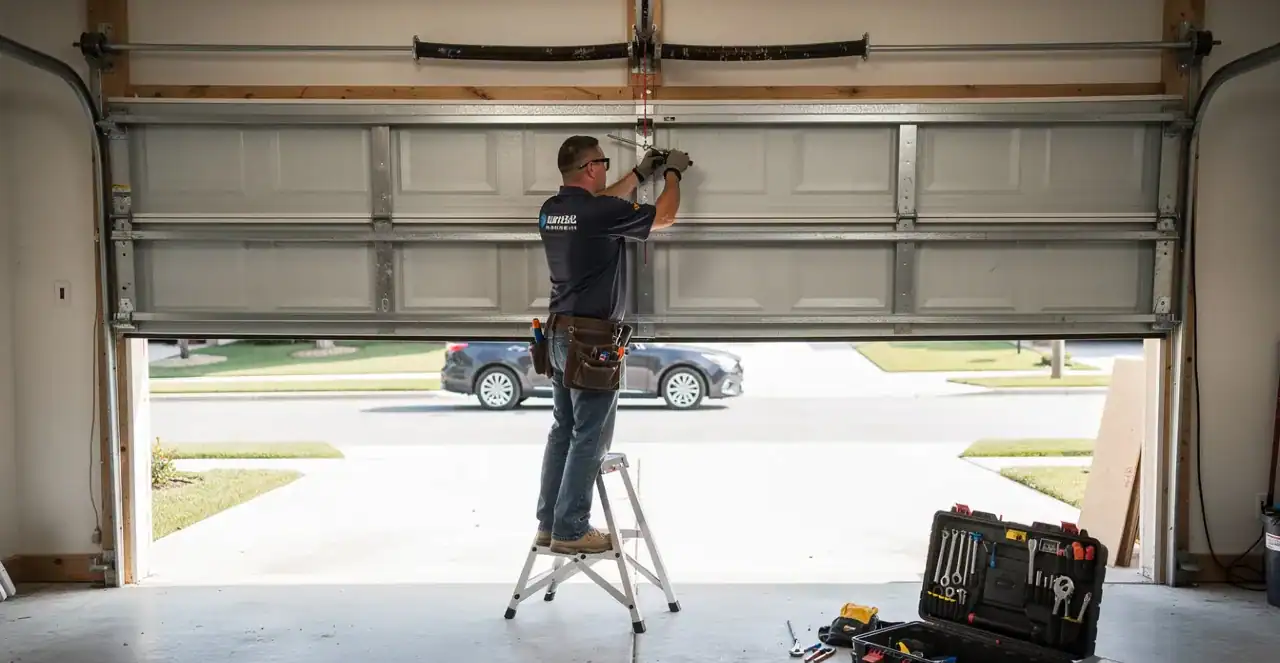
If you’ve ever heard a loud bang coming from your garage and rushed out to find your door frozen in place, there’s a good chance you experienced a broken garage door spring. It’s one of the most common and most jarring issues homeowners face. The good news? With a little knowledge and proper maintenance, you can anticipate when your springs are nearing the end and act before they fail on you.
So, how long do garage door springs last? The short answer: typically 7 to 10 years, depending on how often you use your garage and how well you maintain it. But there’s a lot more to it than that. Let’s break it all down.
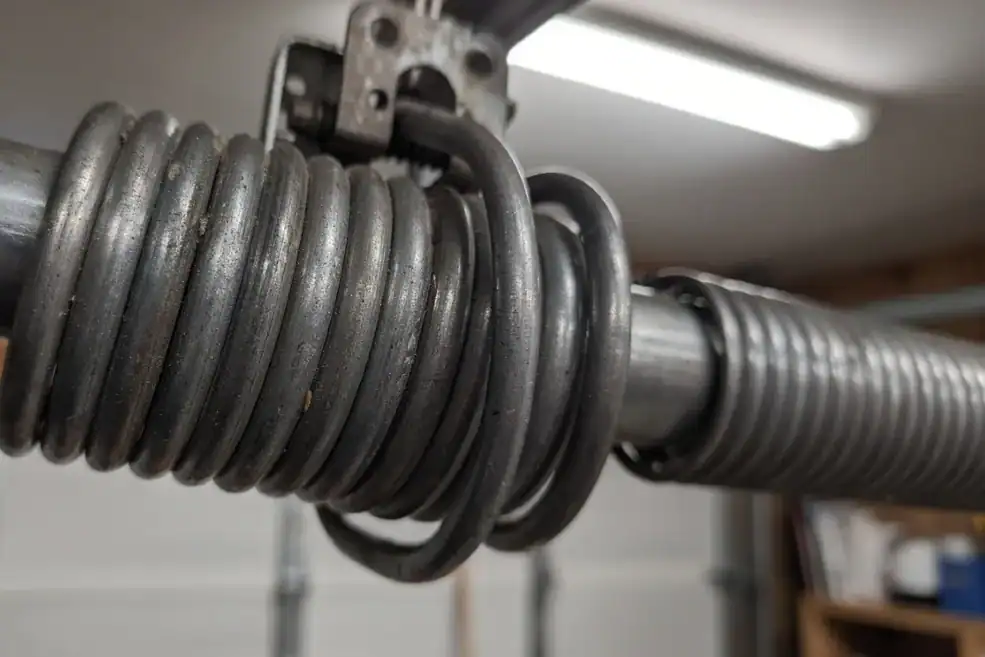
Before diving into lifespan, it helps to understand what garage door springs actually do. Your garage door, whether it’s a single-car or double-car style, is surprisingly heavy. A standard residential door can weigh anywhere from 130 to over 400 pounds. Springs are what make it possible to lift that weight with minimal effort, whether you’re using a garage door opener or lifting the door manually.
Springs store mechanical energy by winding tightly under high tension. When you open the door, that stored energy does the heavy lifting. When the door closes, tension is rebuilt. Every open-and-close cycle counts against the spring’s total lifespan, and each one adds a tiny bit of wear to the metal over time.
Without functioning springs, your entire door system is essentially inoperable. The opener would burn out trying to carry all that weight alone, and lifting the door manually would become a serious workout, or worse, a safety hazard.
Residential garage doors rely on two main types of springs, which age differently over time.
Torsion springs are mounted horizontally above the door opening on a metal shaft. They work by twisting, or torquing, along that shaft to store and release energy. Torsion springs generally last longer than their counterparts, typically rated for 10,000 to 20,000 cycles. For most households, that translates to about 7 to 12 years of reliable use.
Because of how they’re built, torsion springs offer a more controlled, smooth operation and tend to hold up better under the door’s weight over time. They’re also less likely to cause damage if they fail, since safety cables often contain the broken parts..
Extension springs run along the horizontal tracks on either side of the door and stretch outward to create tension. They’re common on lighter, single-car doors and are generally rated for 7,000 to 10,000 cycles, giving them a slightly shorter lifespan, around 7 to 9 years with average use.
One important distinction: extension springs require safety cables threaded through them. Without these cables, a broken spring can snap with dangerous force. If your garage uses extension springs and they don’t have safety cables installed, that’s a fix worth making right away.
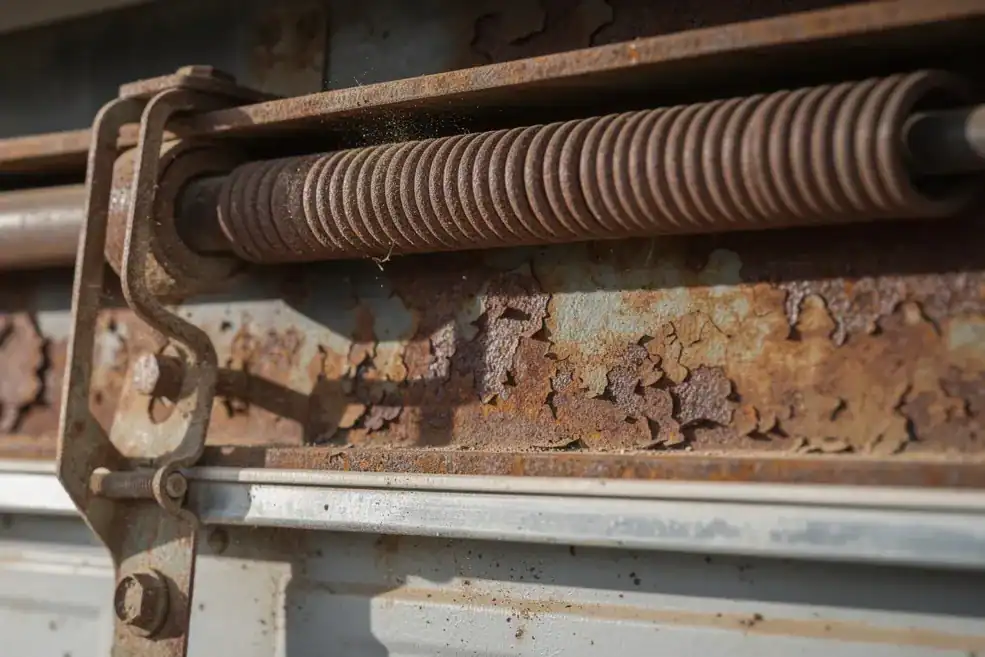
Spring life isn’t just about the calendar. Several factors can dramatically shorten — or extend — how long your springs stay in good shape.
This one’s simple math. If your household opens and closes the garage door four times a day, you’re burning through about 1,460 cycles per year. At that rate, a standard spring rated for 10,000 cycles lasts roughly 6 to 7 years. A larger family using the garage 8 to 10 times daily could see springs wear out in as little as 3 to 5 years.
Heavier doors put extra strain on springs every single cycle. If you’ve ever upgraded to a solid wood door or added insulation panels, you may have added significant weight without adjusting your spring setup. Springs that aren’t matched to the door’s actual weight will experience excessive strain and premature wear.
Metal contracts in the cold, and garage springs are no exception. Cold weather makes springs more brittle and susceptible to cracking. It’s not a coincidence that spring breaks tend to spike in winter months. If you’re in Oklahoma, where temperatures can swing dramatically between seasons, this is something to take seriously. Fluctuating humidity can also accelerate rust formation on springs, which accelerates wear and shortens the spring’s lifespan considerably.
This is the factor you have the most control over. Springs that receive regular lubrication and regular inspection consistently outlast neglected ones. Lubrication reduces friction between coils, keeps the metal from drying out and cracking, and helps the entire system run more efficiently. Skipping this step, even for a year or two, can noticeably shorten how long your garage door springs last.
Catching failing springs early can mean the difference between a planned service call and a sudden spring failure that leaves you stranded. Here’s what to watch for:
We’ll be direct here: no, and we strongly advise against it. Garage door springs are under an enormous amount of high tension, enough to cause serious injuries or even death if something goes wrong during removal or installation. Improper handling of a wound spring can cause it to release violently, and without proper tools and training, the risk simply isn’t worth taking.
This is one of those jobs that requires a trained technician every time. Whether you’re dealing with broken garage door springs on a residential door or replacement garage door springs on a commercial system, the process involves carefully releasing tension, removing the old spring from the metal shaft, and installing and calibrating new ones, all while managing the weight of the door and the potential energy stored in nearby components.
If you try to handle this with improvised tools or without experience, you’re not just risking the door; you’re risking yourself and anyone nearby.
You can’t stop springs from aging, but you can absolutely slow the process down. Here’s what actually works:

If your springs are about seven years old or older, it’s worth having them inspected even if nothing seems wrong yet. By the time visible signs of failure appear, you may already be one cycle away from a sudden failure that damages other components such as cables, drums, the opener, or even the door panels themselves.
Don’t wait for the loud bang. Proactive replacement protects your garage door, your opener, and most importantly, the people who use it every day. Schedule a garage door maintenance inspection before problems escalate into expensive emergency repairs.
At Next Level Garage Service, we help Oklahoma City homeowners stay ahead of spring issues with expert inspections, same-day repairs, and quality replacements built to last. Whether you’re dealing with a broken spring right now or want to make sure everything stays in working order, we’re here to help. Contact us to schedule your service today.


