
Garage Door Torsion Spring vs Extension Spring: Key Differences
February 27, 2026
Most homeowners don’t give their garage door springs much thought — at least not until the door suddenly stops cooperating.…



It often starts with a loud bang coming from the garage, followed by a door that suddenly won’t open. For many homeowners, this moment is confusing and alarming—and for good reason. A failing garage door spring can turn a normal day into a safety concern very quickly.
Recognizing the common signs of garage door spring failure is crucial for preventing accidents and avoiding expensive repairs. Identifying these early can help you address issues before they become serious and keep your garage door system operating safely.
Most homeowners tend to overlook garage door springs because of their size and the fact that they work quietly in the background.
Garage door springs are responsible for lifting and counterbalancing the weight of the door. The springs hold most of the door’s weight, keeping the door’s structure together and regulating its movement, which prevents the garage door opener from having to lift the full weight. Most residential garage doors weigh between 150 and 300 pounds, and the springs are what make it possible for the door’s smooth operation.
If a spring fails, the opener is forced to lift the full weight of the door, which it is not designed to do. This can make the door feel extremely heavy and difficult to lift, and often leads to motor damage.
There are two main types of garage door springs.
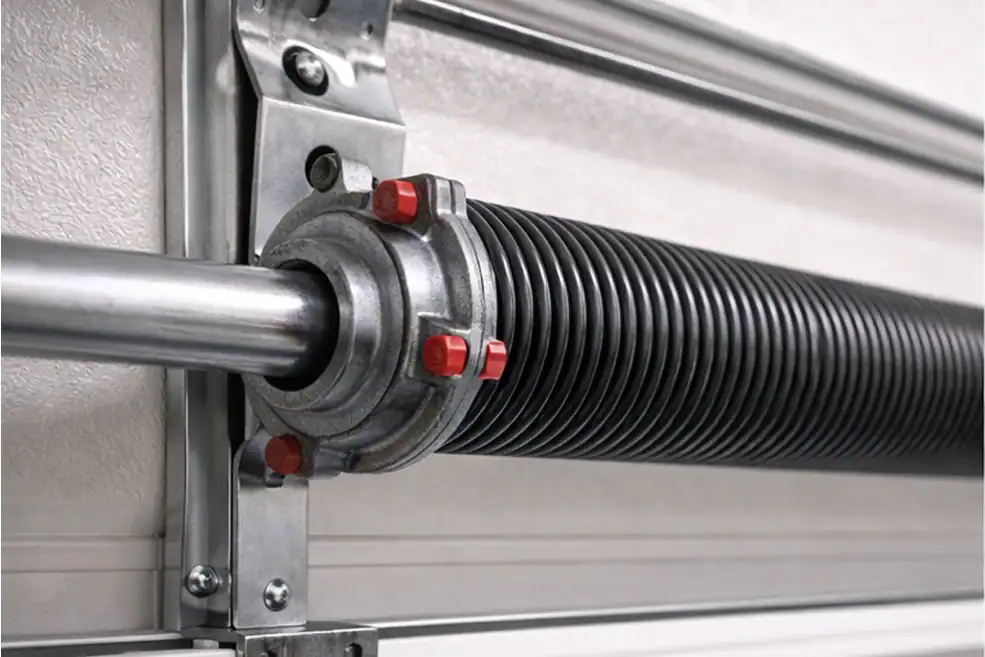
Torsion springs are typically mounted above the garage door and are used for larger doors, using rotational force to lift it evenly.
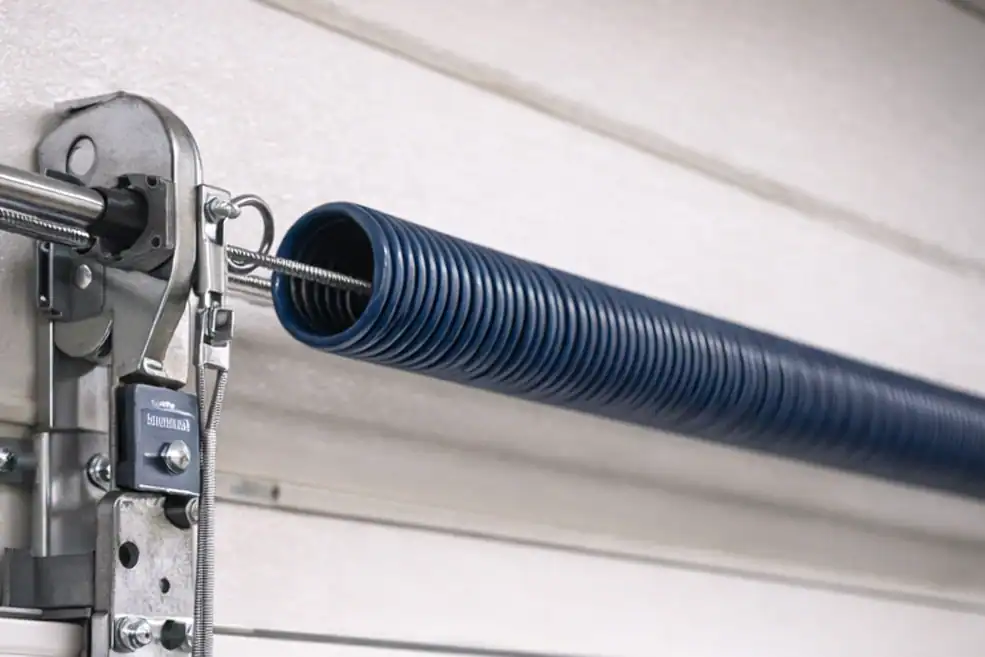
Extension springs are positioned above the horizontal tracks and work with a cable and pulley system; they run along the sides of the door and stretch as the door closes.
Both perform the same job, though they tend to fail in different ways over time. In many older homes, extension springs are still common, while newer garage doors are more likely to use torsion spring systems for smoother operation.
Garage door spring failure is one of the common garage door problems homeowners experience. Each time a garage door opens and closes, the springs stretch and contract under heavy tension, and over thousands of cycles, even high-quality springs eventually weaken and reach the end of their lifespan.
But there are also a few reasons that contribute to its failure, such as corrosion and weather. When moisture or humidity gets into the garage, it can cause rust to form on torsion springs and extension springs. Rust not only weakens the metal but also increases friction, making the springs work harder and fail sooner. Meanwhile, extreme cold can make garage door springs more brittle, leading to a higher risk of snapping.
Improper maintenance can also accelerate spring failure. Without regular lubrication and inspection, springs are more likely to develop issues that go unnoticed until a spring breaks—often with a loud noise that signals a sudden and potentially dangerous problem. Ignoring the warning signs can lead to serious injury or expensive repairs.
One of the most obvious signs a spring is about to break is a sudden loud bang coming from the garage. Many homeowners describe it as sounding like a gunshot or firecracker. This noise occurs because a garage door spring breaking releases a tremendous amount of tension, resulting in a very loud sound. In most cases, this noise means a spring’s sudden failure.
Keep in mind that the garage door should not be used. Continuing to operate the door can cause additional damage or create a serious safety risk.
A properly working garage door lifts with very little effort because the springs support most of the door’s weight. When it suddenly feels extremely heavy when manually opened, this is a strong indicator of spring failure.
When a spring breaks, the opener struggles to compensate because it must lift the full weight of the door. The opener is not designed to lift the door’s full weight, and this extra strain can burn out the motor or damage internal gears. Forcing the opener to move the door almost always leads to bigger repairs.
If the garage door lifts unevenly or looks crooked as it moves, it’s often because a spring has broken on one side, causing the door to become uneven and affecting the balance and operation of the other side as well. This imbalance puts unnecessary stress on other components such as tracks, rollers, and cables.
A loose or misaligned spring can also lead to uneven door movement and is a sign of wear or potential failure that requires professional attention.
Homeowners should also look for any visible signs of faulty springs, such as rust, stretching, or deformation.A quick visual inspection can sometimes confirm a broken spring.
If you notice visible gaps in the coils of a garage door spring, this is a clear sign that the spring has snapped and needs immediate replacement. Extension springs may appear stretched, rusted, or frayed.
Taking a photo of visible damage can help a technician diagnose the issue faster.
In many homes, the automatic opener may still run while the door remains closed or only lifts a few inches. What’s happening here is the door is too heavy without proper spring support. Consequently, the opener is no longer able to operate safely when the springs are broken.
If the garage door is not working properly or only opens partially, do not attempt to leave the door open, as this can be dangerous and should be avoided.
Checking the opener’s indicator lights is helpful, but professional service is usually required to ensure the system is functioning properly and to resolve the issue safely.
A garage door that jerks while opening or slams shut unexpectedly is a serious safety concern. This behavior is caused by unbalanced spring tension and can lead to injury or property damage. If a garage door spring breaks, the door may not stay in the open position and could fall suddenly if it is not properly supported.
The area around the door should be cleared immediately, and manual lifting should be avoided. Do not pull the emergency release when the door is open or partially open, as this can cause the door to fall and result in serious injury or damage.
Stop using the garage door and disengage the opener. Keep people, pets, and vehicles away from the door’s path. For emergency access, you can pull the emergency release cord to disconnect the door from the opener, but only do this when the door is fully closed to avoid safety risks. Broken springs are under high tension and should only be replaced by a professional. If you notice a broken spring, contact a professional immediately for emergency service.
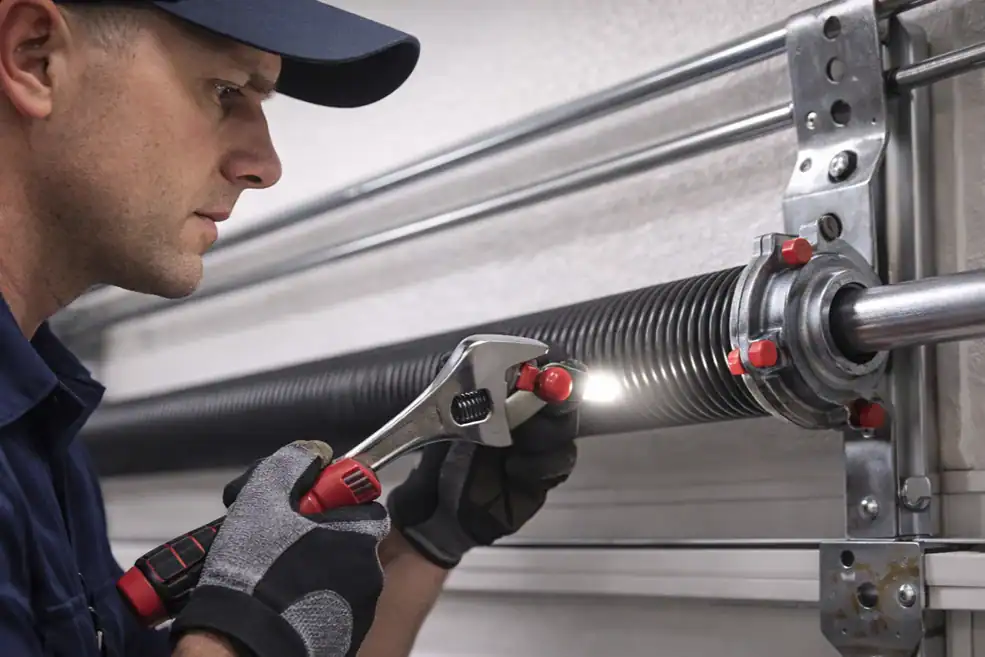
Garage door springs are typically replaced in pairs to ensure balanced tension and even wear. During replacement, a technician safely removes the damaged springs, installs properly sized replacements, and recalibrates the system.
Related components such as safety cables, drums, and bearings are often inspected or replaced at the same time to ensure safe operation.
Residential garage door spring replacement typically falls within a standard cost range, depending on door size, spring type, and overall system condition.
A standard residential garage door spring typically ranges between $150 and $350 per spring, including professional installation. For doors that use a two-spring system—which is common for double-wide garage doors—replacing both springs usually ranges from $350 to $650 total.
Most standard replacements are completed within one to two hours, but larger doors, custom springs, or additional repairs can increase both cost and service time.
Routine maintenance helps extend the life of garage door springs. Staying consistent with basic maintenance can make a noticeable difference in how long garage door springs last.
Garage door spring replacement should never be attempted as a DIY project. The stored tension in springs can cause serious injury. If a spring breaks, the garage door may not stay fully open and could fall unexpectedly, increasing the risk of serious injury. Doors should never be propped open with objects, and vehicles should be kept clear of a malfunctioning garage door.
If you suspect failing springs, contact a professional immediately to prevent safety hazards and further damage. Continuing to use a garage door with broken springs can result in more expensive repairs down the line.
At Next Level Garage Door, we know how disruptive and dangerous a broken garage door spring can be. Spring repair isn’t something to be taken lightly. Our technicians are trained to replace springs safely, accurately, and with the correct specifications for your door. We use high-quality parts, properly balance the system, and perform a full safety check before we consider the job complete.
When homeowners choose us, they’re choosing experienced professionals who do the job right the first time. We don’t rush repairs or overlook worn components. We make sure cables, drums, and hardware are in proper condition so your garage door operates smoothly and safely. Our goal is simple—to restore your garage door with dependable repairs you can trust and service that truly takes things to the next level.
It’s time to spring into action! Get a free estimate today and contact us at (405) 584-6593 or nextlevelgarageservice@gmail.com


