
What’s The Best Garage Doors for Oklahoma Weather Conditions
April 6, 2026
Oklahoma homeowners know better than anyone that the weather here doesn't play nice. From softball-sized hail in the spring to…


How wide is a garage door? It’s one of the first things homeowners ask when planning a garage update or building a new one. At Next Level Garage Services, we’ve worked on just about every kind of garage project you can think of, from tight single-door setups to oversized double-car layouts. If you’re trying to determine the ideal size for your house, this guide outlines the standard options, custom solutions, and cost-effective tips to help you move forward.
Most standard garage door sizes fall within a pretty predictable range. For single garage doors, the average width is between 8 and 10 feet wide. A double garage door typically runs about 16 feet wide, which is enough for two cars parked side by side.
Keep in mind, however, that those are averages. You might have a garage door opening that’s slightly narrower or wider, depending on when your home was built or how the garage was designed. It also depends on vehicle size; a compact sedan doesn’t need the same clearance as a full-size pickup with roof racks. Ultimately, garage doors should do more than just open and close. The right garage door size makes everyday life easier, so you don’t want to squeeze past your car’s width every morning or worry about scraping the mirrors on your truck.
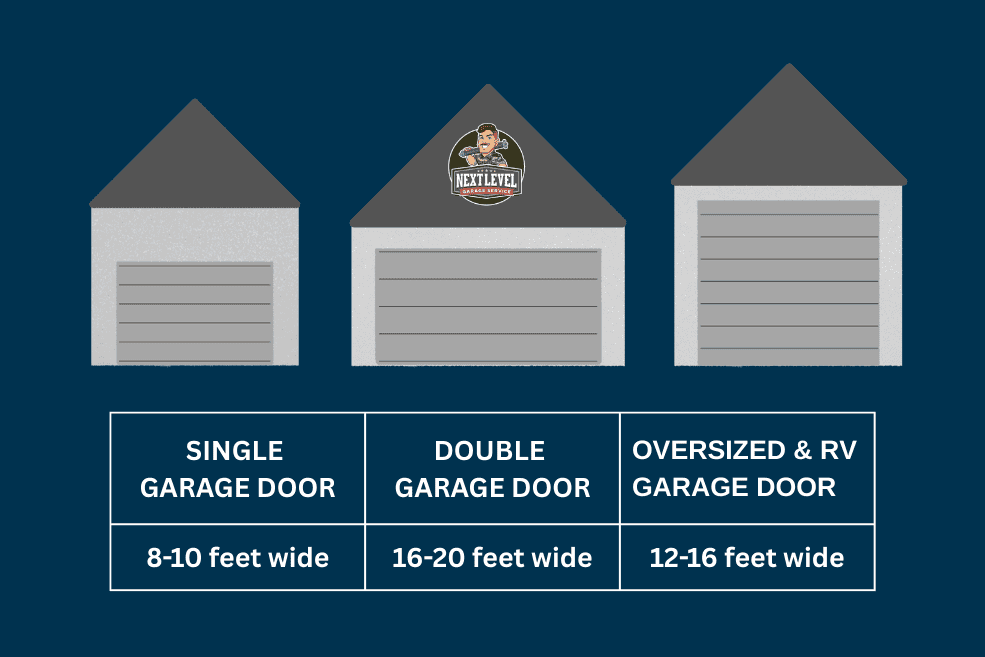
There are some common sizes that can give you a solid starting point when it comes to garage door sizes. Here’s a closer look at what you can expect based on your garage type.
If you have a single-car garage, this is your category. Most standard single garage doors measure about 8 or 9 feet wide and are usually 7 or 8 feet tall. Single garage doors usually fall into one of three widths:
A double garage door, also called a two-car garage door, is designed for two vehicles. The most common double garage door size is 16′ x 7′.
Most double garage doors are:
These doors usually stand 7 or 8 feet tall, but heights can be adjusted based on your garage size, ceiling, or vehicle height. If you’re deciding between two single doors or one large door, think about your layout. Two doors give each vehicle its own entrance, but one wide door is easier to operate.
If you need a bigger door for your RV, trailer, or work truck, you’ll need to go beyond standard sizes. These doors are usually custom garage doors built to fit taller or wider openings, but common sizes for RV garage doors are 10-12 feet wide and 12-14 feet tall.
Available sizes include:
These are often seen in detached garages or commercial spaces where equipment or large vehicles need to get in and out easily. You’ll likely need a custom garage door for these, since they fall outside standard dimensions.
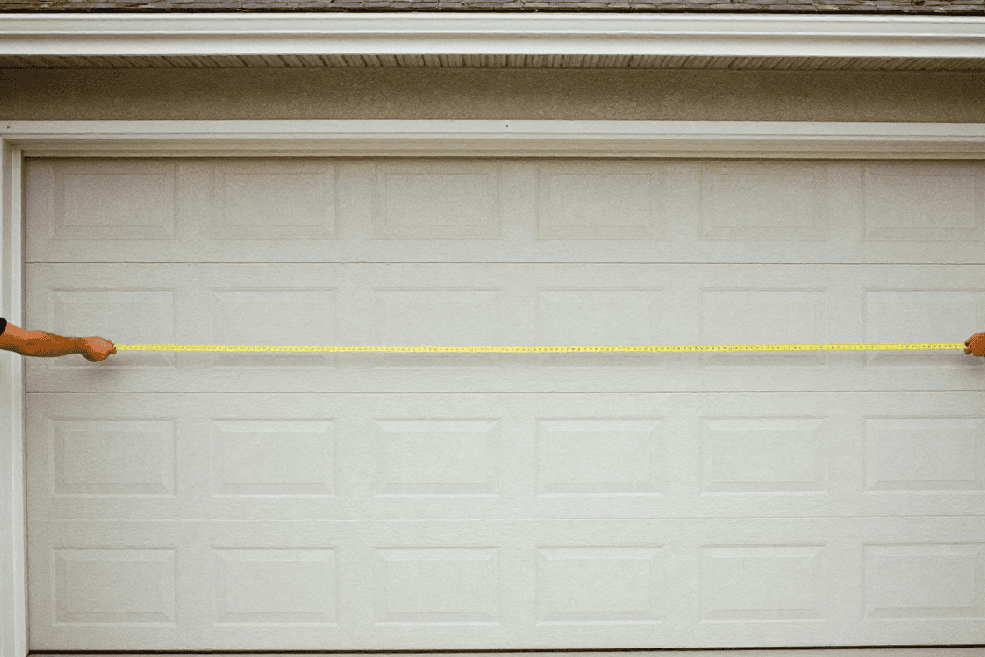
If you’re replacing an old door or trying to plan for a new garage door, getting accurate measurements is the first step. Here’s a simple walkthrough using a basic tape measure:
Stand inside your garage and measure from one side of the door opening to the other. Go from frame to frame. This gives you the width of your door, which will help determine the closest standard garage door size.
Now measure from the floor to the top of the opening. Standard heights are 7 or 8 feet, but it’s best to get the exact number. This ensures your new garage door fits without any surprises.
You also need to know how much room you have above and beside the garage door opening. Measure from the top of the opening to the ceiling (headroom) and from the edge of the opening to the side walls (side room). You’ll need enough space for the track system and possibly the opener.
Take note of windows, outlets, pipes, or anything that might interfere with the garage door track or opener system. If your garage is packed with storage or built unusually, a professional installer can walk you through your specific needs.

Sometimes, standard garage doors just don’t cut it. If your garage is unusually wide, tall, or was built with custom framing, you may need a custom garage door. Custom garage doors can be designed for car collectors or those wanting to add a workshop. Many manufacturers offer custom garage door sizes tailored to specific needs.
Custom sizes allow you to match non-standard openings without major remodeling. They’re especially useful for:
These doors are made to fit the garage door opening exactly and can be customized for panel style, insulation, color, and opener type. They may cost more and have a longer lead time, but they’re worth it if you want a perfect fit that functions properly and keeps your energy efficiency high.
Below are a few things to think through before finalizing your door.
You’ve got the numbers—we’ve got the tools. Whether you need a basic steel single or a wide double car setup, we’ll make sure your size garage door gets installed right. At Next Level Garage Services, we handle everything from quoting to installing, and we always accommodate your schedule.
Just reach out and send in a request for a quote, and we’ll get the project squared away!


