
Signs of Frayed Garage Door Cables and Immediate Action Required
January 16, 2026
That grinding noise from your garage door isn't normal. Frayed garage door cables are among the most dangerous yet overlooked…



You know that sound. It starts as a faint squeak when you’re leaving for work. A week later, it’s a full-blown screech. By month three, your garage door sounds like a haunted house prop, and you’re googling “how to lubricate my garage door” at 2 AM.
At Next Level Garage Service, we’ve seen this story play out hundreds of times across Oklahoma. The good news? A noisy garage door isn’t usually crying out for expensive repairs. Most of the time, it just needs some attention. Fifteen minutes and the right lubricant can transform your garage door from a neighborhood menace back to a silent operator. When a man lubricates garage door components regularly, it keeps every part aligned and the garage door running smoothly year after year.
Every time your garage door moves, dozens of metal parts rub against each other. Hinges pivot. Rollers spin. Springs coil and uncoil. Without proper lubrication, all that metal-on-metal contact creates friction, heat, and noise.
Here’s what happens without regular maintenance:
A little grease prevents all of this. Plus, you get to stop apologizing to your neighbors every morning.
Twice a year. Mark it on your calendar right now. Spring and fall, like changing your smoke detector batteries.
If you live somewhere with extreme weather, bump it up to every three or four months. Humidity, dust, and temperature swings all accelerate wear on garage door components.
Also, if your garage door is making loud noises between scheduled maintenance, don’t ignore it. That’s your door sending an SOS.
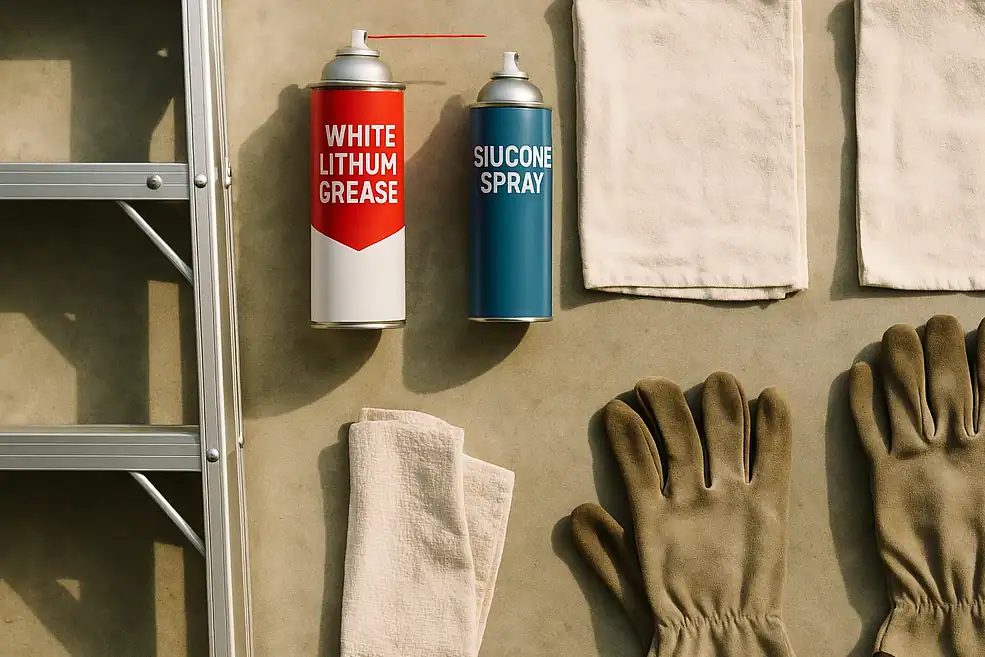
Grab these items before you start:
That’s it. No special tools, no engineering degree required.
This is where people mess up. Not all lubricants are created equal.
This is what you want for most garage door parts. White lithium grease sticks to metal surfaces, handles temperature changes, and doesn’t run off when things heat up. Use it on springs, bearing plates, hinges, and anywhere metal touches metal.
It comes in a spray can with a little straw attachment. One or two sprays per spot is plenty. More isn’t better (it just makes a mess and can attract dirt).
Silicone spray works great for garage door rollers and smaller moving parts. It dries faster than grease and won’t attract as much dust.
Here’s a mistake I see constantly: someone grabs the WD-40 because it’s already in the garage. Don’t do this.
WD-40 is a cleaner and degreaser, not a lubricant. Sure, it’ll quiet things down for a day or two. But then it strips away the existing grease, evaporates, and leaves your parts more exposed than before.
Save the WD-40 for stuck bolts. Use real grease on your door.
Before you spray anything, disconnect the power to your garage door opener. Unplug it from the ceiling outlet or flip the breaker.
Pull the red emergency release cord to disengage the opener. Now you can move the door manually to inspect everything.
Take a minute to look around. Check for:
If you spot serious damage (especially with springs or cables), stop here and call a professional. Those components are under extreme tension and can cause real injury if they break during repair.
Follow these steps in order for the best results.

You want to clean the tracks, not grease them. Why? Because lubricated garage door tracks attract every speck of dust and dirt in your garage. That gunk builds up and causes jerky movement.
Use a damp cloth to wipe down the inside of both tracks. Get rid of cobwebs, dust, and debris. For stubborn grime, hit it with automotive brake cleaner or use a vacuum with a brush attachment.
Clean tracks equal smooth operation. Greasy tracks equal problems.
Your garage door has hinges at every panel joint. These pivot points take a beating every time the door moves.
Spray a small amount of white lithium grease into each hinge where the pin goes through. Give it one quick spray, let it penetrate for a second, then wipe away any excess lubricant with your rag.
Work your way up both sides of the door. Don’t forget the hinges near the top and bottom.
Rollers are critical for ensuring smooth operation. Most doors have 10 to 12 of them, and each one needs attention.
For metal rollers: Apply white lithium grease directly to the bearings (the part where the wheel connects to the shaft). Spin the roller by hand to work the grease in. Wipe off excess.
For nylon rollers: Only lubricate the small ball bearings on the shaft, not the nylon wheel itself. Grease on nylon attracts dust and actually increases friction. Keep it light—one or two sprays per roller.
If any rollers are bent, chipped, or wobbling, they need replacement.

The garage door springs do the heavy lifting. They’re under constant tension and need protection from rust and wear.
For torsion springs (the big ones mounted above the door): Spray lithium-based grease along the entire coil. You don’t need to soak them; a light coating will spread naturally when the door moves. Hit the bearing plates at both ends too.
For extension springs (the ones that run parallel to the garage door tracks): Same deal. Coat the coils and pay attention to the pulleys and cables connected to them.
This is probably the most important garage door lubrication step. Well-greased springs last years longer and prevent sudden breaks.
If your garage door has a chain drive or screw drive opener, the top rail and chain need some grease too.
Spray a thin line of lubricant along the rail where the chain or screw runs. Then manually move the trolley back and forth to spread the grease evenly. Use a damp rag to wipe away drips.
If you have a belt drive system, skip this step. Belts don’t need lubrication.
Almost done. Give a quick spray to:
These spots collect grime and can get sticky over time. A little spray and a quick wipe keeps everything functioning smoothly.
Reconnect the power source, re-engage the opener, and fire it up. Open and close the door three or four times. Listen carefully.
You should hear a dramatic difference. Instead of squeaks and grinding, you’ll hear a smooth, quiet hum. If something still sounds off, go back and check that spot.
The door should glide up and down without hesitation. If it’s still jerky or slow, you might have a different issue.
Still noisy after lubrication? Check for worn rollers, loose bolts, bent tracks, or opener issues. Sometimes the noise comes from the motor or gears, not the door itself.
Too much grease? Wipe it off with a rag. Excess grease attracts dust, which defeats the purpose. Less is more when you lubricate a garage door.
Door still moves slowly? This might not be a garage door lubrication problem. Check spring tension, roller alignment, opener force settings, or physical obstructions.
DIY garage door lubrication handles most noise and performance issues. But some problems need professional help and the best garage door maintenance services in Oklahoma. That’s where Next Level Garage Service comes in.
Call our experts if you’re dealing with:
Springs especially are dangerous. They’re under hundreds of pounds of tension. If a spring looks damaged, don’t touch it. Let our trained technicians handle it safely and correctly, making sure all parts properly align before restoring full operation.

Learning how to lubricate your garage door is simple maintenance that pays off immediately. Fifteen minutes of work twice a year prevents noise, extends the life of expensive garage door parts, and keeps your garage door properly maintained.
When your neighbors are dealing with squeaky doors and costly repairs, you’ll be cruising in and out of your garage in blissful silence. Plus, there’s something satisfying about fixing an annoying problem with a $10 can of grease.
If you’ve followed these steps and your noisy garage door is still giving you trouble, contact Next Level Garage Service. Our technicians can inspect, tune, and repair your door so it runs like new again. From simple maintenance to complex repairs, we’re here to keep Oklahoma’s garage doors running smoothly and not making noises all year long.


