
Emergency Garage Door Spring Repair Services in Oklahoma City
April 15, 2026
When a broken garage door spring happens, it never comes at a convenient time. It usually strikes at the worst…
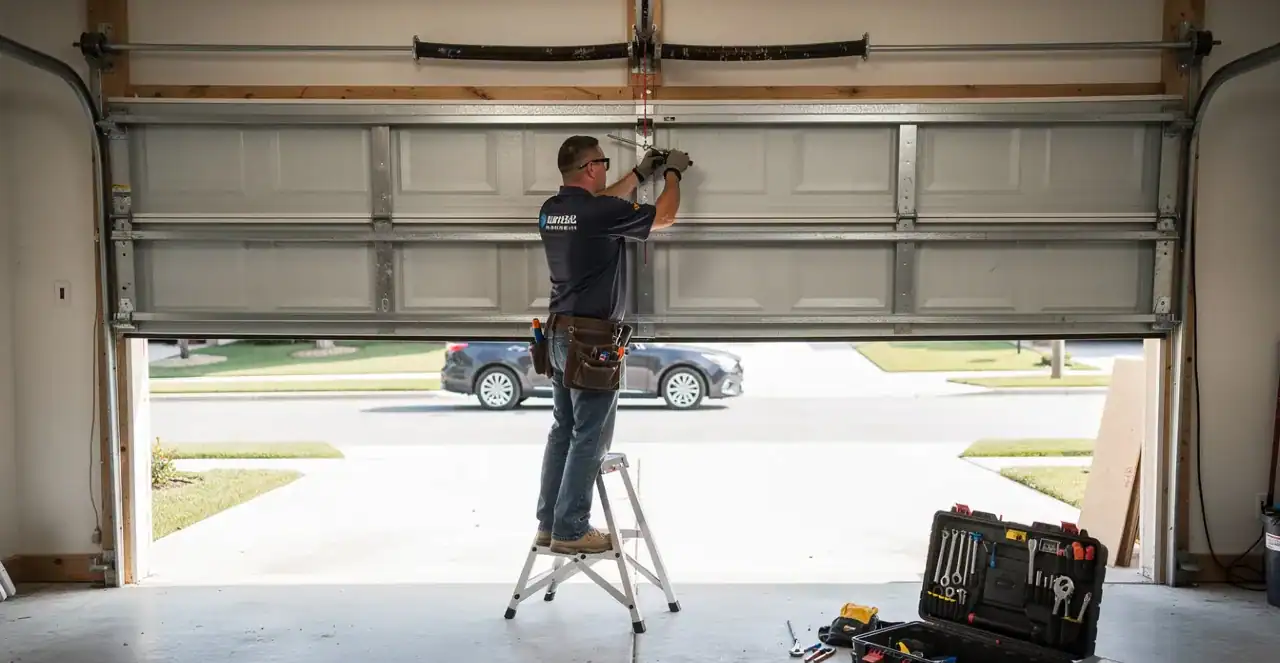


You press the remote, and the garage door rises a few inches before stopping. If you heard a loud bang earlier, a broken spring could be why your car is still stuck inside.
If your garage door spring broke, stop using the door and arrange professional service. The springs help counterbalance the door’s weight; without that support, moving it can be dangerous.
At Next Level Garage Service, we handle broken spring replacements, door balancing, and related repairs across the Oklahoma City and Tulsa areas. Here’s how to recognize the problem, handle the next steps, and understand your replacement options.
First, leave the door where it is. Don’t press the remote again to see whether the problem clears up. If the opener strains against the heavy weight, repeated attempts can damage additional components without fixing anything.
Keep children, pets, and anyone else away from the opening. If the break occurs with the door open or partly raised, don’t walk underneath it or try to lower it yourself. Avoid pulling the emergency release cord on an elevated door; losing the opener’s connection could allow it to fall.
Don’t manually lift the door, even with another person helping. A broken garage door spring changes how the entire system supports the load, and the door may move unpredictably.
When you call us, tell us whether the door is closed, partly open, or sitting crooked. Let us know if your car is stuck inside. Our spring replacement service includes checking surrounding hardware before restoring operation.

A broken torsion spring often has a visible gap between the separated coils above the door. You may notice it from the garage floor without touching anything. Enclosed systems may hide damage, so appearances alone don’t rule out spring issues.
When the garage door opener runs, but the door barely moves, the counterbalance system may have failed. That motor guides a properly balanced door; it isn’t intended to take over the springs’ job. Don’t increase the opener’s force settings to push through the problem.
If one side hangs lower, cables look loose, or you previously noticed uneven movement, stop operating the door. These symptoms can involve springs, cables, rollers, or the track. An inspection identifies the cause.
The two main garage door spring types are torsion springs and extension springs. Both store energy, but they work differently.
Torsion springs usually sit on a shaft above the opening. They twist to provide the torque that helps lift the door through its cables and drums. Many larger doors use two springs for balanced operation; others are designed for one spring. The correct setup depends on the door’s weight and design.
Extension springs typically run beside the horizontal tracks. They stretch as the door closes and contract as it opens. These systems need properly installed safety cables to help contain a spring if it breaks.
Both main types store energy. Parts can remain under high tension even after a full break. Garage door springs can cause serious injury when handled incorrectly, so leave spring replacement to a trained technician. DIY replacement is strongly discouraged. Our team services both systems and offers suitable torsion conversions.
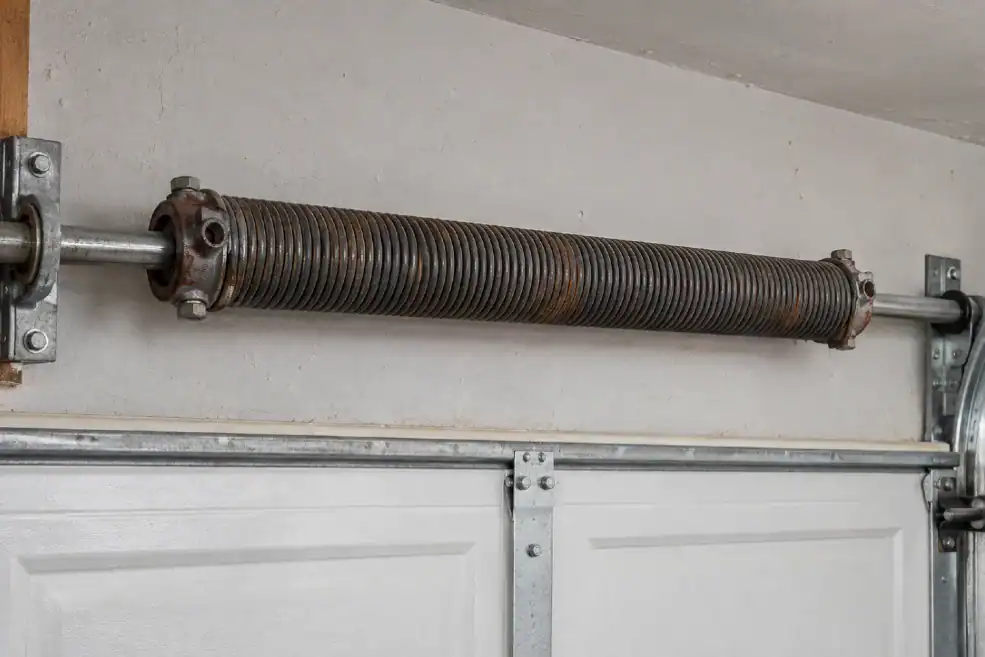
Normal wear and tear is among the most common causes. Each opening and closing flexes the metal, and that repeated work eventually causes fatigue. A sudden failure can be the final result of years of normal wear.
For a standard residential garage door, most springs are rated for about 10,000 cycles. One cycle is one full opening and closing. At four to five cycles a day, that rated cycle life works out to roughly 5½ to 7 years. Actual spring life varies with use and conditions.
Rust also weakens spring wire, while incorrect sizing or installation can contribute to premature failure. Extreme temperature and moisture conditions can affect service life, too. Oklahoma weather makes regular inspection sensible, but a cold morning alone doesn’t explain every broken spring.
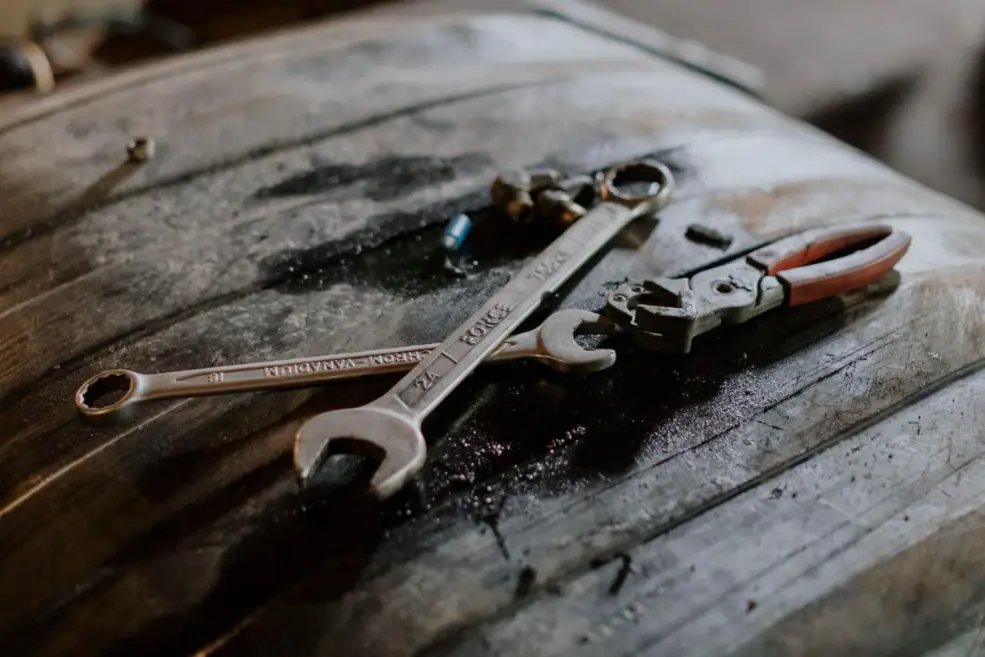
Replacing the damaged part starts with checking the door and its counterbalance requirements. New springs must suit the door’s weight, dimensions, and configuration. Matching by appearance alone can leave the system unbalanced.
At Next Level Garage Service, our garage door spring replacement process includes inspecting cables, drums, bearings, and related hardware. We then check balance and operation after installation. If we find damaged cables or worn rollers, we’ll explain the repair needed before proceeding.
A straightforward spring replacement can take about 1 to 2 hours when the technician has the right parts on hand. If we find damaged cables or hardware that needs extra work, the visit may take longer. Ask us what to expect when you book.
We stock high-cycle torsion and extension springs. These can offer a longer life than standard springs, especially if you use your garage door several times a day. We’ll match the replacement springs to your door’s weight and explain their cycle rating.
Price depends on spring specifications, quantity, labor, and related damage. Replacing a single standard torsion spring generally costs less than replacing a comparable two-spring system. Cable repair or opener damage can increase the total. If both springs are the same age and show similar wear, we may recommend replacing them together. We’ll check the remaining spring and explain what we find.
On a two-spring door, replacing both may make sense when they’re the same age and have similar wear. We inspect the remaining spring and explain whether paired replacement makes sense.
Homeowners comparing estimates should ask what prompted each recommendation. A useful quote identifies the damaged parts and explains the recommended fix.
We’ll explain the price upfront and walk you through the parts, labor, and any applicable warranty.
After the repair, follow your garage door manufacturer’s lubrication schedule and use an approved garage door lubricant. Some owners’ manuals recommend lubricating the springs twice a year. If you hear a new noise or notice rust, ask us to check the door.
Schedule inspections for changing noises, corrosion, or rough operation. Our maintenance services include checking spring tension, track alignment, roller wear, and opener performance. Addressing those problems early helps protect the parts working together.
Don’t operate it. The remaining spring doesn’t make the damaged system safe to use. Wait for inspection and repair.
In most cases, spring failure alone doesn’t require replacing the door. Its overall condition determines whether repair or replacement makes sense.
Tell us when you request service so we understand the situation. Use another entrance to access the garage if available, and arrange alternative transportation while repairs are pending. Trying to squeeze the vehicle underneath a partly raised door puts you and the vehicle at risk.
If you’re dealing with a garage door that’s stuck or sitting crooked, call Next Level Garage Service at (405) 584-6593 for a free quote on spring replacement. We can also check the cables and opener for damage.


